 International Private School of Technology المدرسة الدولية الخاصة للتكنولوجيا Private School مدرسة خاصة للتكوين المهني


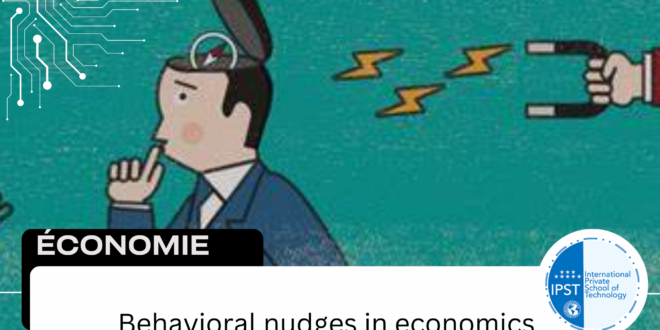
In a world shaped by choices, from what we eat to how we save, behavioral nudges are emerging as powerful tools in economic policymaking. Rooted in behavioral economics, these subtle interventions aim to steer decisions without restricting freedom of choice. But how effective are these nudges in practice—and can they truly foster better economies?
What Are Behavioral Nudges?
Coined by Richard Thaler and Cass Sunstein in their groundbreaking book Nudge, the concept refers to the use of indirect suggestions and positive reinforcement to influence behavior. Unlike mandates or financial incentives, nudges work by adjusting the choice architecture—how options are presented to individuals.
Common examples include:
- Setting default options for retirement savings
- Placing healthier foods at eye level in cafeterias
- Sending reminder texts for tax deadlines
Nudging in Economic Policy
Governments and institutions around the world are increasingly integrating nudges into public policy:
- UK’s Behavioural Insights Team (BIT) has tested nudges in tax collection, energy conservation, and employment.
- The U.S. Social and Behavioral Sciences Team has implemented interventions to boost student aid applications and retirement savings.
The results? Often low-cost, high-impact improvements in behavior—without heavy regulation.
Do Nudges Actually Work?
Meta-analyses of behavioral interventions show mixed but generally positive results:
- A 2020 study by Nature Human Behaviour found that nudges increased desired outcomes by 8.7% on average.
- However, the effectiveness depends heavily on context, design, and the targeted behavior.
For example:
- Health-related nudges (like calorie labeling) can shift behavior quickly.
- Financial nudges may take longer but often lead to sustained impact.
Nudging for Sustainable Economic Growth
In developing economies, nudges have been applied to:
- Improve sanitation via visual cues
- Encourage school attendance with text reminders
- Reduce corruption through transparency prompts
While they’re not a silver bullet, these strategies complement traditional economic tools and encourage human-centered policy design.
Ethical Considerations
Critics argue that nudges can be manipulative or paternalistic. The key is transparency and ensuring interventions are:
- Evidence-based
- Respectful of autonomy
- Designed for public good
When done ethically, nudging is less about control and more about empowering better choices.
The Future of Nudging in Economics
Behavioral nudges are not just academic theories—they’re practical, scalable, and increasingly vital in shaping smarter economies. By understanding how real people make decisions, we can design systems that nudge societies toward resilience, sustainability, and equity.