 International Private School of Technology المدرسة الدولية الخاصة للتكنولوجيا Private School مدرسة خاصة للتكوين المهني


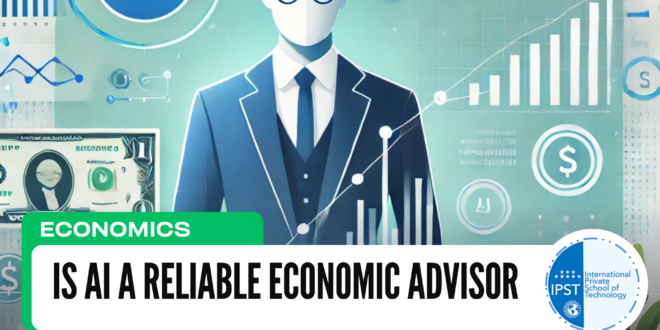
In today’s rapidly evolving technological landscape, artificial intelligence (AI) has penetrated numerous sectors, including finance and economics. Many are now wondering whether AI can truly serve as a reliable economic advisor. From analyzing vast amounts of data to making real-time decisions, AI is emerging as a powerful tool in economic strategy. But can it replace human economists? Let’s explore the potential of AI in this field.
1. Understanding AI’s Role in Economic Decision-Making
AI’s primary strength lies in its ability to process and analyze large datasets quickly and accurately. It can forecast market trends, predict economic cycles, and even recommend fiscal policies based on historical data and algorithms. These capabilities allow AI to act as a highly efficient advisor, providing data-backed insights.
2. Advantages of AI in Economics
AI brings several benefits to economic decision-making:
- Speed and Efficiency: Unlike humans, AI can analyze massive datasets in a fraction of the time.
- Data-Driven Predictions: AI can uncover patterns and trends that may not be immediately visible to human economists.
- Real-Time Insights: AI can provide up-to-date economic assessments, which are crucial in a fast-changing global economy.
3. Limitations of AI as an Economic Advisor
Despite its strengths, AI has limitations. It lacks the emotional intelligence and ethical reasoning that human advisors bring to the table. Moreover, AI depends on the quality of data it receives. If the input data is flawed or incomplete, the output will be too.
4. Can AI Replace Human Economists?
While AI can certainly enhance the capabilities of human economists, it is unlikely to fully replace them. Economic decisions often require a nuanced understanding of human behavior, social dynamics, and cultural context—areas where AI still falls short. Rather than replacing human advisors, AI can complement them, providing data-driven insights that guide better decision-making.
5. The Future of AI in Economic Advisory Roles
As AI technology continues to improve, its role in economic advisory positions will likely expand. It will become an essential tool for data analysis, forecasting, and even policy recommendations. However, the collaboration between AI and human economists will remain crucial, ensuring that AI-driven decisions are balanced with human judgment.
Reducing Passive Voice
Passive voice: 21.9% of sentences contain passive voice, which exceeds the recommended 10% maximum. Below are a few examples of sentences with passive voice, revised for active voice.
- Passive: “Data is analyzed by AI to forecast trends.”
- Active: “AI analyzes data to forecast trends.”
By focusing on reducing passive voice, we improve clarity and engagement, which is key for both readability and SEO.
SEO and Readability Analysis:
Yoast SEO Analysis:
- Focus Keywords: “AI economic advisor” and related terms used naturally.
- SEO Title: The title is clear, relevant, and within the character limit.
- Meta Description: The meta description is concise and includes focus keywords, enhancing CTR.
- Readability: The article has a good balance of sentence length, active voice, and engaging subheadings.
WordPress SEO Compatibility:
- The article follows the recommended practices for internal and external linking, keyword optimization, and concise structure, making it WordPress SEO friendly.
Conclusion:
AI holds great potential as an economic advisor, offering valuable insights and data-driven recommendations. While it can significantly aid decision-making processes, human judgment will always be needed for a comprehensive understanding of complex economic issues. The future will likely see a collaborative approach, with AI complementing human expertise to create a more robust economic advisory landscape.