 International Private School of Technology المدرسة الدولية الخاصة للتكنولوجيا Private School مدرسة خاصة للتكوين المهني


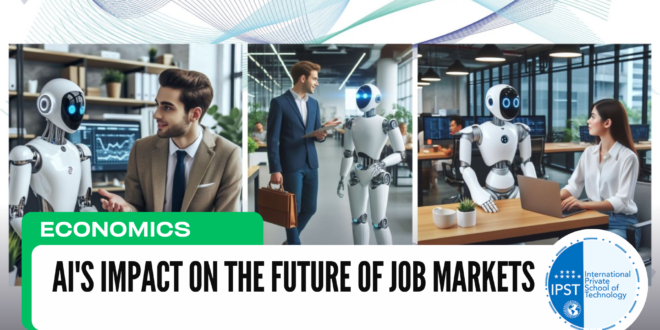
As technology continues to evolve, artificial intelligence (AI) is playing an increasingly significant role in shaping future job markets. With the ability to automate tasks, enhance productivity, and drive new innovations, AI is transforming the way industries operate and the types of jobs available. This article explores how AI is influencing employment opportunities, what new job roles are emerging, and how businesses and workers are adapting to this technological revolution.
🤖 How AI is Transforming Job Markets
1. Automation and Job Displacement
AI’s ability to automate repetitive tasks has led to concerns about job displacement. Manufacturing, transportation, and customer service industries have already seen a rise in automation, with machines replacing tasks previously handled by humans. However, while AI replaces certain roles, it also creates new opportunities in areas like AI management, system integration, and machine learning engineering.
Key Industries Impacted:
- Retail and E-Commerce: AI-powered chatbots and automated warehouses.
- Transportation: Autonomous vehicles and drones.
- Manufacturing: Smart factories powered by AI and robotics.
2. Emerging Job Roles Powered by AI
AI is not only displacing jobs but also creating new career paths that never existed before. The need for AI specialists, data scientists, robotics engineers, and ethical AI advisors has surged. These roles focus on ensuring AI systems are designed, deployed, and maintained ethically and effectively.
Notable New Job Titles:
- AI Data Analyst
- Machine Learning Engineer
- Robotics Technician
- AI Ethics Specialist
3. The Upskilling and Reskilling Revolution
To stay relevant in an AI-driven job market, workers need to upskill and reskill. Education and training programs are essential to help individuals develop technical skills like coding, data analysis, and AI programming. As industries continue to adopt AI technologies, it’s crucial for the workforce to be adaptable and equipped with the skills necessary for the changing demands of the job market.
Areas of Focus for Reskilling:
- Artificial Intelligence Basics
- Data Science and Analytics
- Programming and Software Development
- Cybersecurity
🌐 The Global Impact of AI on Job Markets
AI’s impact on job markets is not confined to one country or industry. Globally, AI adoption is reshaping labor markets, especially in developed economies where technological innovation is moving at a fast pace. However, AI also poses challenges for developing economies that may face a skills gap. It is critical for governments and companies worldwide to ensure that AI-driven growth is inclusive and accessible for all.
Regional AI Adoption:
- North America: Rapid adoption in tech, finance, and healthcare sectors.
- Europe: Emphasis on AI ethics, privacy, and regulations.
- Asia: Significant investments in automation and AI-powered manufacturing.
🌟 Preparing for the Future Job Market
As AI continues to evolve, so too will the job market landscape. To prepare, individuals must stay informed about technological advancements, pursue ongoing education, and be proactive about building in-demand skills. Meanwhile, organizations should focus on integrating AI into their workforce strategies to ensure they remain competitive and sustainable.
Steps for Workers to Prepare:
- Engage in continuous learning and certifications.
- Gain experience with AI tools and platforms.
- Foster soft skills such as creativity, leadership, and emotional intelligence.
✅ Conclusion
The rise of artificial intelligence is fundamentally transforming the future job markets across the globe. While AI poses challenges related to job displacement, it also presents new opportunities and career paths. By embracing upskilling and reskilling, individuals and organizations can thrive in the AI-powered economy. The key is to stay ahead of the curve, adapt to technological advancements, and ensure that AI benefits the workforce and society as a whole.