 International Private School of Technology المدرسة الدولية الخاصة للتكنولوجيا Private School مدرسة خاصة للتكوين المهني


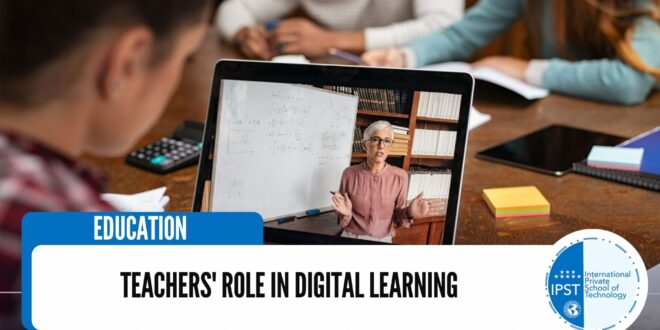
With the rapid technological advancements in the education world, digital learning and remote education have become an essential part of contemporary education systems. In this context, the role of teachers has changed significantly, as they have shifted from being mere knowledge transmitters to guides and facilitators of the educational process. This transformation not only involves the use of technology but also reflects a change in teaching strategies and the way teachers interact with students. In this article, we will explore how the role of teachers is changing in light of these digital transformations and how they can adapt to this new environment.
1. From Traditional Teacher to Digital Guide
Previously, the role of the teacher was limited to delivering knowledge through traditional classroom lessons. However, in the age of digital learning and remote education, the teacher’s role has become more diverse and interactive. Today, teachers are no longer just a source of information; they have become guides who help students access and apply knowledge using digital tools.
Technology provides teachers with new tools that allow them to customize lessons based on the individual needs of students, which enhances their role as facilitators of the educational process rather than just information sources. Teachers can now interact with students in real-time through online learning platforms.
Source: EdTech Magazine – The Evolving Role of Teachers in the Digital Classroom
2. Promoting Self-Learning and Independence
A significant change in the role of teachers in digital learning is the promotion of self-learning among students. With digital content and online educational resources available, students can now learn many concepts on their own. However, the teacher’s role remains important in guiding students and providing support.
Teachers today encourage students to take initiative in their learning and enhance their ability to research and explore independently. This is because remote learning often requires students to be more responsible for their academic progress, which means the teacher’s role shifts to being a mentor guiding students on this journey.
Source: The Chronicle of Higher Education – How Digital Learning is Shaping the Future of Education
3. Interaction and Communication via Digital Learning Platforms
Effective communication with students is one of the biggest challenges in remote education. In this context, teachers need to use digital learning platforms to interact with students continuously. These platforms are not limited to delivering remote lectures but also include group discussions, assignments, and interactive quizzes that enable teachers to monitor student progress consistently.
In this framework, teachers are required to adopt new digital tools to interact with students and track their academic progress, which demands advanced digital skills. They can use tools such as email, forums, and virtual classrooms to provide individual and group support.
Source: Forbes – The Future of Teaching: Digital Tools Transforming the Classroom
4. Developing Digital Skills for Teachers
To meet the needs of students in the era of digital learning and remote education, teachers must continually develop their digital skills. This includes becoming familiar with different educational platforms, using digital classroom management tools, and learning online assessment techniques.
Teachers today need to adapt to digital tools quickly and efficiently, which requires continuous training and technical support. Improving digital literacy is an essential part of the educational transformation in the digital age, helping teachers deliver outstanding educational experiences.
Source: Inside Higher Ed – The Importance of Digital Literacy for Teachers
5. Challenges Teachers Face in Remote Education
Despite the many benefits of digital learning and remote education, teachers face several challenges. Among these challenges are the difficulty in maintaining student engagement in a remote learning environment, ensuring that all students have access to the necessary technology to access digital content, and managing time while providing personalized support online.
Despite these challenges, the teacher’s role remains crucial in guiding students through these transitions and offering both educational and emotional support.
Source: Edutopia – Overcoming the Challenges of Online Teaching
6. New Teaching Strategies in the Age of Remote Education
In remote education, teachers need to innovate new teaching strategies to keep students engaged and motivated. For example, teachers can use interactive video clips, online group activities, and digital simulations to enhance the learning process.
Teachers can also help students develop critical thinking and problem-solving skills through interactive activities that enhance their ability to think independently.
Source: The Guardian – The Role of Teachers in the Age of Online Learning
Conclusion
The role of teachers has drastically changed in the age of digital learning and remote education. From traditional lecturers in physical classrooms to digital guides facilitating remote learning, teachers today face new challenges and must continually develop their digital skills to meet the needs of students. Despite these challenges, the teacher’s role remains essential in promoting self-learning and creating an interactive educational environment that supports students on their academic journey.
This article provides a comprehensive look at how the role of teachers has changed due to digital transformations, with a focus on the challenges and opportunities available in remote education.