 International Private School of Technology المدرسة الدولية الخاصة للتكنولوجيا Private School مدرسة خاصة للتكوين المهني


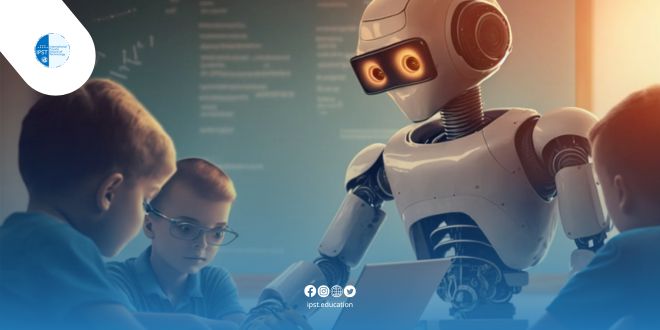
With the rapid advancement of technology, artificial intelligence (AI) has become an integral part of our daily lives. In the field of education, many are asking the question: can AI-powered robots replace teachers in the classroom? In this article, we will explore the possibilities that AI offers in education, focusing on whether robots can take on the role of traditional teachers.
1. AI: Supporting and Enhancing Education
Artificial intelligence has become an essential tool in improving the educational process. It can help develop the learning experience by personalizing educational content, providing individualized learning experiences, and speeding up and simplifying the grading process. For example, AI can evaluate student performance more quickly and accurately.
Source: EdTech Magazine – The Role of AI in Education
2. Robots as Support, Not Replacement
While AI enhances the learning experience, it cannot fully replace teachers. A teacher is not just a source of knowledge but also a social and emotional guide. Although robots may be effective in delivering content, they lack the ability to build human relationships that help students grow academically and emotionally.
Source: Forbes – How AI is Changing Education
3. AI Supporting Teachers
In fact, technology is not meant to replace teachers but to facilitate their work. AI can help teachers with administrative and assessment tasks, allowing them more time for direct interaction with students. For example, AI can provide detailed analyses of student progress and performance, helping teachers make better educational decisions.
Source: EdSurge – The Limits of AI in Education
4. AI Cannot Understand Human Emotions
One of the main limitations of AI is its inability to understand human emotions. Robots can deliver information and organize lessons, but they cannot provide emotional support or understand students’ personal needs. These aspects remain crucial for the success of the educational process.
Source: The Guardian – Can AI Be Ethical in Education?
5. AI: A Complementary Tool for Teachers
Instead of replacing teachers, AI can become a complementary tool that helps improve the educational experience. By offering innovative tools, AI can make student learning more efficient, while the teacher continues to play the most important role in inspiring and guiding students. In the future, AI will create a more personalized learning environment.
Source: World Economic Forum – AI and the Future of Education
Conclusion
Although AI provides many opportunities to enhance education, it cannot fully replace teachers. The need for human teachers will persist, as education is a complex human process that requires personal interaction and emotional support. In the future, AI will remain a supportive tool, not a replacement, to help teachers deliver better and more personalized education.
Sources: EdTech Magazine, Forbes, EdSurge, The Guardian, World Economic Forum.